
Every year I take time to reflect on my reading list. I use it as both a measurement of what I have been able to spend time on to read, as well as a challenge to apply AI capabilities to test their progress.
You can read my past reading lists here:
Essential Reading List 1
Essential Reading List 2
Essential Reading List 3
At the end of 2025 and the beginning of 2026 I had to admit that it was time to test something “new”. A fresh approach, if you will. Outside of reading (and surfing), listening to music is probably the thing I spend most time on. Having DJ’ed for 25 years now, I guess I am best described as a Vinyl collector. I am not exclusively “analog” though – my MP3 collection probably can stand on its own.
Spotify is also in heavy use. Now the interesting part about Spotify (as a DJ) though is that I “give away” a lot of my own “style curation” to an algorithm I cannot actively control. My data input is limited. I frequently catch myself in a public space, listening to 2-3 tunes and immediately recognising the songs being curated by Spotify, due to the nature of certain tracks being “allocated” to a certain style.
When I worked with my friends and colleagues at Mooddesigner, a company specialised in curating music for public spaces (e.g. retail outlets, coffee shops and bars), we developed a setup to avoid this conundrum. Each space had a personalised and dedicated algorithm – mirroring a personal DJ for that space. Aware of different levels of foot traffic and other data points to support “moods” for that specific space.
In 2025 AI and GenAI capabilities moved towards a more sophisticated “Agentic” capability tool set. I guess I figured I needed to put my new tools to the ultimate DJ test: can AI support my own music curation? Do I have enough data? Will it be valuable?
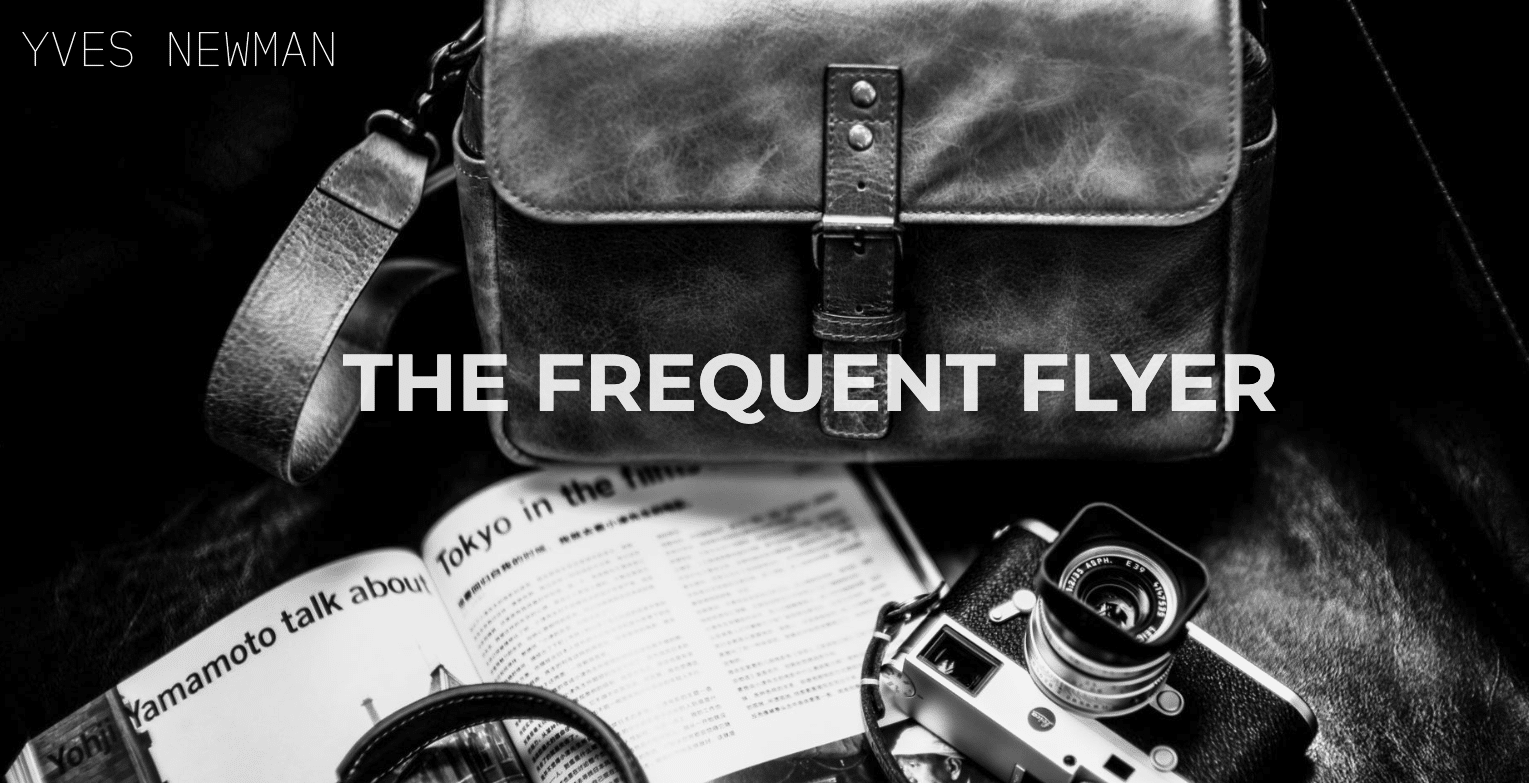
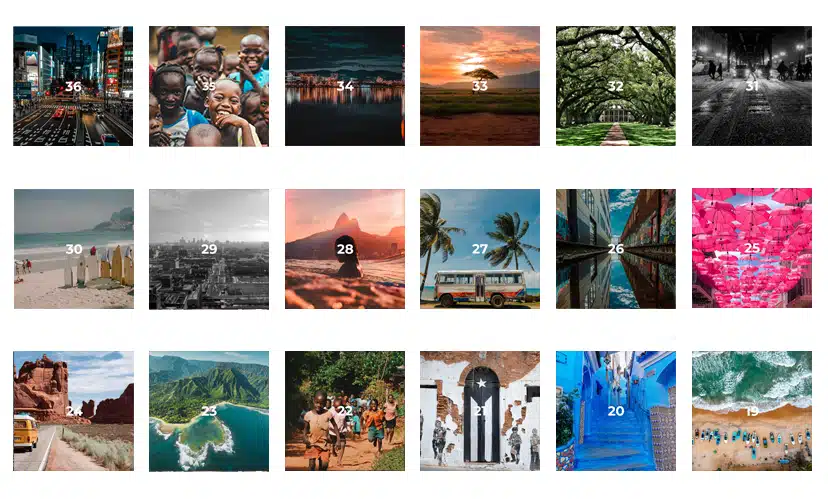
As a baseline for my own analytics I used a collection of music I created called “Frequent Flyer”. It now spans 36 mixes. I started to create these to support my work travel. I would frequently find myself on a plane, running out of interesting music to listen to. Especially my international flights. So the longer the mix, the better.
You can find the mixes on Mixcloud and Soundcloud here:
https://www.mixcloud.com/yvesnewman
https://soundcloud.com/yvesnewman
or at https://yvesnewman.com
In case you want to listen to my latest release, it is below:
Hypothesis
Can GenAI solutions actually help at expert level, when it comes to music? Given the nature of “taste” being something very personal. How have data sets on existing music included taste profiles? Is an AI Agentic able to outperform solutions from Spotify?
Hypothesis: Given a sufficiently detailed personal music dataset with rich metadata, an agentic AI system can outperform Spotify’s algorithm in recommending music that matches my specific taste profile.
In November of 2025, Spotify released their own research. In “Teaching Large Language Models to Speak Spotify: How Semantic IDs Enable Personalization” (noting that I found this AFTER I have tried all my own efforts), it is again indicating that training LLMS on Semantic “Music” understanding is going to be the next step in music listening “empowered by AI”. The work has been published by Marco De Nadai, Praveen Ravichandran, Divita Vohra, Vladan Radosavljevic, Sandeep Ghael, Mounia Lalmas and Paul Bennett.


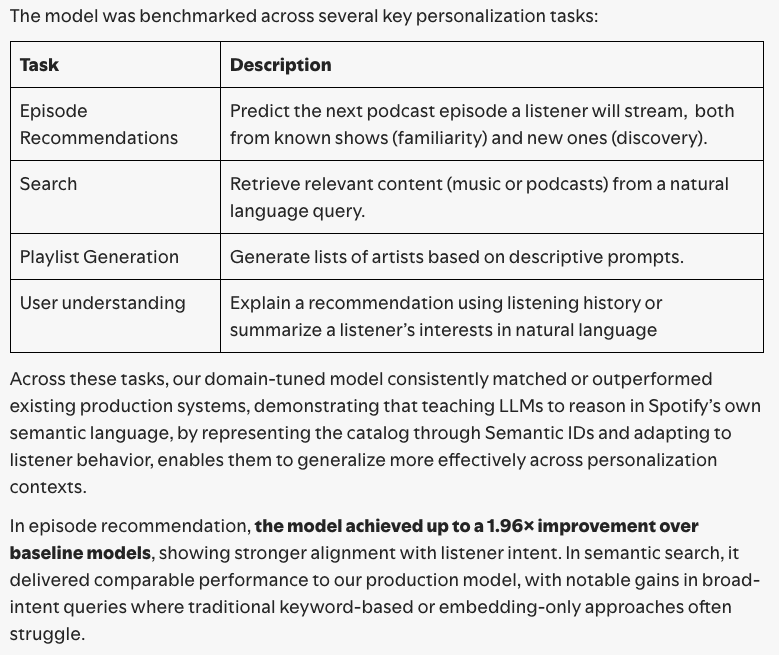
Great insights and a great improvement. I do have to note though that what my own little trial found is a key missing “data gap”: Spotify lacks indicators own my own taste, if the vectors representing it are having gaps – such as my DJ mixes are not indexed on it. Which brings me to my own version of a DJ Agentic Assistant…
AI Tooling 2025






For my assistants I chose OpenAI’s ChatGPT (Agent Mode), Claude (Code), Manus, some queries with Perplexity, minor work on Gemini and executed some Python via my Visual Code setup.
My steps included:
> Establish a clean verifiable data set
> Identify gaps, optimized prompts and re-ran the entire data set multiple times (iteration if you will) to get to a complete trustworthy outcome
> Taste vector definition (semantic understanding)
> DJ adjacency mapping (contextual positioning)
The outcome:
1. A complete, auditable catalogue
2. A semantic taste model
3. A positioning map within the DJ ecosystem
4. A working recommendation engine
The novel approach in my efforts was the use of Agentic capabilities to both extract insights, enrich data and provide outputs in formats other agents can use. Without these key additions on the capabilities of these agent workflows, none of the outcome of this effort would have been possible. Agents had to look up music across multiple systems, access APIs, create and execute python code and most of all: handover tasks between systems.
Data
I fed a list of 2,805 hand picked songs into my personalised DJ algorithm build. The list could have been more expansive, but I figured I would give it a try with a reasonable data set first. The mixes I supplied are an estimated total of 3,110 MINUTES = 51.8 HOURS = 2.2 DAYS of continuous playback. I would say that this should be enough data.
The key here is that I kept the meta tags across my 36 Frequent Flyer mixes as part of my analysis, as well as an additional 6 mixes I have done outside of this series. This allowed the above AI models to do some extra “magic” I will share further below.
Style Vectors
The first task was to try to identify and build vectors to capture the underlying “taste” of what I like to listen to. All of these vectors were built exclusively by leveraging AI:
- Modern Soul Revival / Deep Funk
- Brazilian MPB / Samba-Funk / Jazz-Funk
- Deep / Soulful / Afro House
- Neo-Classical / Ambient Composition
- Spiritual / Modal / Deep Jazz
- West African / Sahel Groove Axis
- Future-Soul / Broken Beat / Nu-Jazz
- Indie / Folk Songwriting
- Global Psychedelic / Downtempo Groove
- Instrumental Hip-Hop / Beat Tapes
- Latin / Salsa / Afro-Cuban Jazz
- Regional / Heritage Pop & Wildcards
Each of the vectors comes with a short description of what “style” and “taste” it incorporates:
Modern Soul Revival / Deep Funk
A crate-diggers’ continuum of warmth, restraint, and groove. Analog soul aesthetics, slow-burn funk, and modern revival cuts that privilege feel over flash. Music that sits confidently in the pocket and ages well in long-form sets.
Brazilian MPB / Samba-Funk / Jazz-Funk
Brazil as rhythm science. MPB, samba-funk, and jazz-leaning arrangements where harmonic sophistication meets physical swing. Ideal for sunlit transitions and emotionally rich mid-tempo arcs.
Deep / Soulful / Afro House
House music with memory and lineage. Deep, spiritual, and Afro-influenced cuts that emphasize patience, low-end hypnosis, and communal uplift rather than peak-time aggression.
Neo-Classical / Ambient Composition
Sparse, cinematic, and contemplative. Modern classical, ambient, and compositional works that function as breath, space, and emotional reset—often bridging narrative moments in mixes.
Spiritual / Modal / Deep Jazz
Jazz as invocation. Modal, spiritual, and exploratory recordings where repetition, trance, and intention outweigh virtuosity. Music that changes the temperature of a room.
West African / Sahel Groove Axis
Hypnotic cyclicality from Mali, Senegal, and the wider Sahel. Desert blues, mbalax-adjacent rhythms, and modal guitar traditions that feel ancient and future-proof at the same time.
Future-Soul / Broken Beat / Nu-Jazz
Forward-leaning Black music ecosystems. Broken rhythms, jazz harmony, and electronic production converging into restless, urban, post-genre soul.
Indie / Folk Songwriting
Narrative-first songwriting. Intimate, often understated compositions where lyrics, voice, and emotional pacing matter more than production density.
Global Psychedelic / Downtempo Groove
Slow-motion psychedelia across borders. Dubby, cosmic, and groove-based tracks that stretch time perception and work exceptionally well in extended blends.
Instrumental Hip-Hop / Beat Tapes
Producers as composers. Instrumental hip-hop, beat scenes, and sample-driven works that foreground texture, loop logic, and head-nod minimalism.
Latin / Salsa / Afro-Cuban Jazz
Dancefloor intelligence. Salsa dura, Afro-Cuban jazz, and rhythm-forward Latin recordings with deep percussive literacy and social energy.
Regional / Heritage Pop & Wildcards
Contextual anchors and outliers. Culturally specific pop, regional classics, or historically important recordings that don’t cluster stylistically but matter narratively.
According to my assistants, my DJ style is:
Curated groove journeys rooted in soul, global rhythm, and restraint — prioritizing flow, texture, and human timing over impact or spectacle.
I will take that, thank you!


Genuine Value
So far for the analysis part. I guess I could have described this to you as well, without the AI support. The issue in AI projects is to derive additional value. Value I would not have been able to establish without.
For my little “DJ” project I was after reducing time spent in “finding” new music. I am not a fan of Spotify’s algorithm when it comes to try to recommend new music to me. It is lacking some of the meta data I was able to provide my own model. Furthermore, the vectors it is using (of which I am unaware as to what level of depth they leverage in their data dimensions to achieve them) seem to be constantly lacking a level of detail, but most of all: they struggle to predict what “I like”…
An example of value I was after:
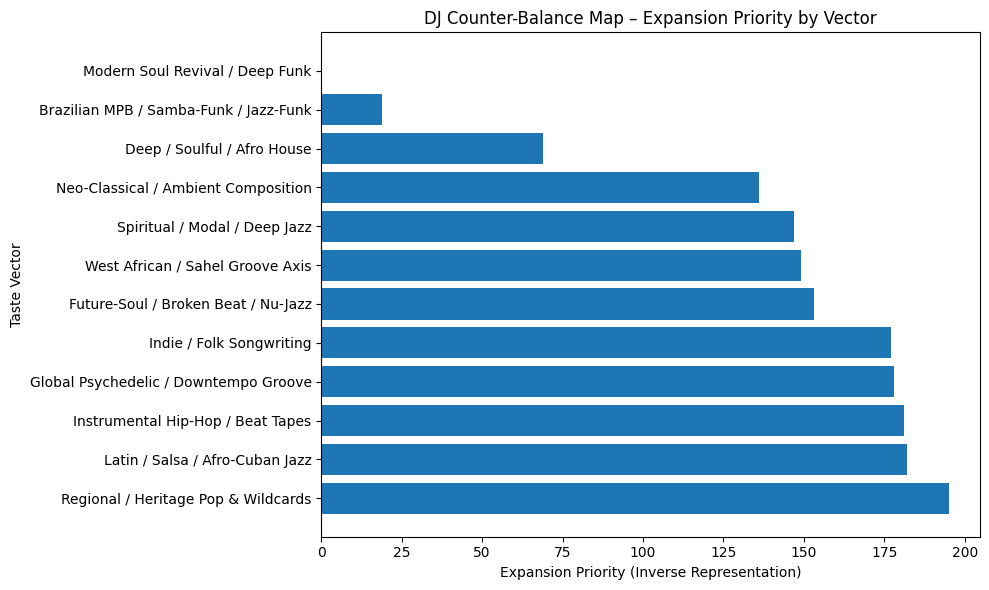
Instead of asking “what do I play most?“, this asks:
“Which vectors should be intentionally fed to evolve my musical taste without breaking identity?“
The Challenge
After all my analytics, I had to test the agent I built on bringing “new music” discovery to me. No other task has shown the challenge of identifying something NEW to the various AI tools than this step.
An example: I prompted the new agent to provide me “5 Regional / Heritage Pop & Wildcards”
Hamid Al Shaeri – Ayonha
Omar Souleyman – Warni Warni
Ammar 808 – Maghreb United
Altın Gün – Leyla
Nusrat Fateh Ali Khan – Mustt Mustt (Massive Attack Remix)
They all seem pretty accurate. Some even have names of artists I already like (so just an extension of their songs I have not listened to yet).
The main issue: they are often hallucinated. Despite a ton of efforts on my side, a lot of the GenAI models available lack the right data insights to ensure the tracks they recommend actually exist. I have to give Manus some credit: because it grounded the approach a bit different, it returned the most reliable input of new music. This would be in line with the performance of Claude in my tests, which is probably leveraged behind the scenes inside Manus as well.
Now you might be wondering, what did the new recommendation engine actually suggest (that Spotify did not come up with prior): here are 2 samples
My verdict/learnings
In 2025 Agentic systems have come a long way. LLMs are getting better and better with the expansion of their training data. Musical taste though (and this applies to Spotify as well) is something explicitly personal. Predictions are challenging and make us “human” and yield very individual outcomes.
The main benefit of my new Agentic DJ Assistant is the opportunity to cut down on time “discovering” new music digitally. I now do not have to rely anymore on other algorithms, I have built my own. I can refine it.
The biggest improvement of my little effort are some learnings on where to apply AI and where not to. Here are some examples:
- Always (ALWAYS) show details (e.g. in OpenAI to keep an eye on the code written)
- Study the python code to learn…
- Restrict prompts up front with a very strict DO and DO NOT framework
- Always triple check the outputs
- Try not to remain in the same chat, after the LLM has taken a wrong turn: restart > loops are a like a death spiral
- LLMs need more semantic training data on music
- Use multiple systems to separate the workload and identify strengths and weaknesses
- Make steps transferable
Conclusion
I highly recommend giving the currently available Agentic systems a try with something as personal as music. You can probably try the same with book recommendations. The key I guess is the availability of enough training data.
I have learnt a ton of each “agent’s capabilities” and shortcomings.
